For a day or ad hoc
Advisory
For when you need a clear behavioural view before a decision.
Your Behavioural Science Partner
A new tool is live, but people still use the old workaround. A service looks sensible, but people leave at the key moment. A campaign gets attention, but not action. A team keeps slipping back to the old way.
These problems often get treated as comms, training or motivation problems.
Sometimes they are. Often, something else is going on. The behaviour has not been understood clearly enough yet.
I help teams work out what people are doing, why it makes sense to them, and what needs to change around the behaviour.
I work with organisations, teams and agencies when success depends on people behaving differently. That can show up in different ways.
Different settings. Same useful question: what behaviour does this work depend on, and what is making that behaviour more or less likely?
I help answer four questions.
Most work starts with a broad goal. I help turn the goal into a clear behaviour. Who needs to do what? When does it need to happen? What are they doing now? What happens if that does not change?
People behave inside real conditions. I look at the behaviour in context. The point is not to blame people for what they are doing. The point is to understand why the current behaviour makes sense. That is where better fixes come from.
The answer is not always more information, more training or a stronger message. I help find the changes most likely to matter, then turn them into practical options the team can use.
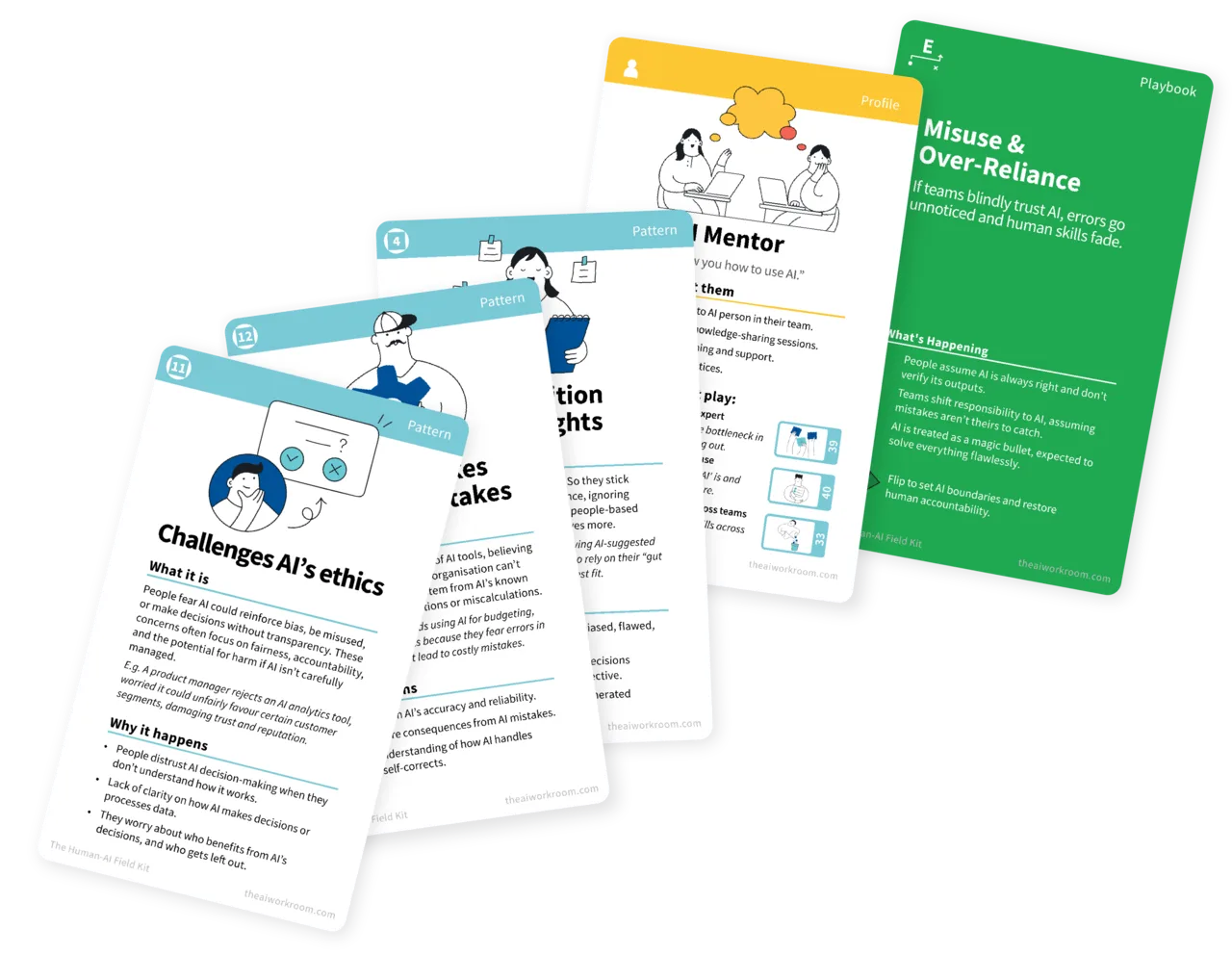
Some projects need a way for the team to keep making better behavioural decisions after the project ends. That might mean a framework, toolkit, card deck, canvas, workshop method, playbook, or digital tool.
Bring me in when behaviour is central to whether the work succeeds. That might be early, in the middle, or after launch.
The launch has happened. The training has been done. The logic makes sense on paper. But the old way is still winning.
Culture often changes before people have language for it. Small behaviours show up first. People avoid decisions. Trust gets thinner.
Some campaigns need awareness. Others need people to take action, repeat an action, stop doing something, or make a choice at a specific moment.
People leave, delay, avoid, ignore, drop out or give up for reasons that are often hidden inside the experience.
A strategy can make sense on paper and still depend on people behaving in ways they do not currently behave.
Sometimes the task is not to fix one behaviour straight away. It is to help a team better understand the people they support, manage or serve.
I have spent years helping teams make sense of behaviour and turn that thinking into practical tools, strategies and decisions.
I built BehaviourKit, a system for helping teams define, diagnose and design for behaviour. I have built behavioural frameworks, courses, toolkits, card decks and practical methods for teams, students and organisations.
I taught behavioural design at Hyper Island, Politecnico di Milano and Manchester Metropolitan University.
That balance matters because the work has to be both rigorous and usable. Strong enough to guide decisions, and clear enough for a team to keep using after the project ends.
I have worked withMeta
PwC
Accenture
World Economic Forum
Estonian Government
Infosys
D&AD
Hyper Island
"By Friday we had a live test. Two weeks later the behaviour had shifted."Product lead
"We had spent thousands on training we could not figure out how to use. Lauren gave us tools we were using the following week."Programme manager
"Genuinely blew us away. Full of moments we could not believe we had not thought of."Katie Milioni, CEO, MyHabeats
Tell me what is happening.
What are people doing now? What needs to happen instead? Where does it seem to break? I will tell you honestly whether I can help, and where I would start.